Monday, April 27, 2020

Midsummer Day's Musings


I dream of a summer that once was
Lived in lightness and sun.

In beaches, parks, in supposed bliss
None unsought, naught undone:


Market streets and impulse eats
Slides, swinging, parks brimming
Party dresses, salon-ed tresses 
Teeming malls and movie halls
Cricket craze in the summer blaze
And spur o’ moment holidays.
So breathless, so tireless
So fearless, those summers.


And now we huddle in stillness
Huddle apart, huddle within.
To each, her own address
Such a summer this has been.

And we huddle in this stillness
Socially distanced mites of hope
Even as tiny chinks in the darkness
Lighten us, help us cope.

And now we huddle in stillness
In the silence and din of our homes.
And thrive in a new busy-ness
As time, relentless, drones.


And now we huddle in stillness
Circumscribed by our walls.
Truth be told, droll thankfulness
In humdrum chores and calls.


And now we huddle in stillness
Necessity mothering invention
Shaking age-old “don’t know”-ness
No win too small to shun.

                As we wait:    in this crimping liminal
                As we wait:    to spring to the normal


 ---Which normal, I wonder---

A return to Old Breathlessness?
Or to craft a new Mindfulness?

Monday, January 6, 2020

Homecoming


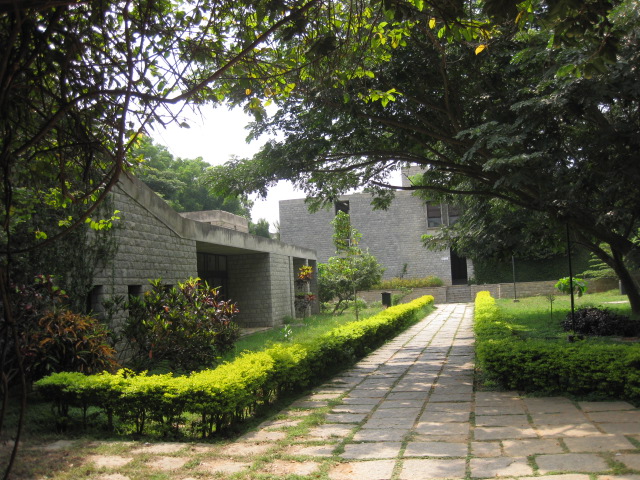
There is always something special in going back to one’s roots. Especially when that means going to a place as captivating, as elegant as this campus.

As majestic as ever
When we left this breathtakingly beautiful campus over a decade ago, we carried a lot of it within ourselves. After all, it was in this place that some of us had learnt how splendid yet how tough being out on our own could be. Some learnt that they could simultaneously and with equal passion, love and hate the same thing. Each of us was tested to the hilt in various ways: thriving under extreme pressure, living with the staggering burden of expectations, dealing with bitter disappointment, building and retaining friendships in a competitive environment, always doing all we could to make the best out of any challenge that was thrown at us. Above all, managing to thoroughly enjoy every (ok, almost every) moment  of this mind-boggling, almost-too-fantastic -to-be real package. Two years that lasted a lifetime. Two years that flitted by before we could make sense of everything that was happening. Two years when we managed to cram ourselves with pre-placement talk pizzas while chasing resume-points, survived on borrowed notes and tutorial sheets while trying to manoeuvre the thicket of relative grading, even as submission deadlines, committees, and coursework kept us on our collective toes. All washed down with generous helpings of late-night coffee and DC++ downloads.


The scene of our many exploits
Ten years is a lot of time, and despite this shared history I worried that this homecoming may turn out to be far less than all it was touted to be. After having seen so much more of the real world, perhaps we would be underwhelmed by the occasion? Some of us had blazed trails from the get-go, some of us had slow starts but then pivoted into exciting paths, while others had sailed steadily through calmer lanes. How would we bond together, coming as we were now, from different places, with diverse life experiences? Would that decade-old shared history serve to paper over how different each one of us has become?


And then we all got together. Yes, some of us, in smaller groups, had kept in touch, but we discovered that being together again within this lovely campus completely redefined the experience. It was not simply about the shared “IIMB-ness” that we carried within ourselves that was the glue. It was also about the many little bits of ourselves that we had left behind, both individually and collectively, on campus. 


Those precious little crumbs of our long-ago selves that we had forgotten in the intervening years: those were what we reclaimed. Perhaps that impishness that defined our younger days. Maybe the one friend who got you through the first week on campus (whom you had inexplicably lost touch with). Or that one spot near the amphitheatre that was your go-to place for some peace and quiet. Or how creative you can get to (pretend to) stay awake at a lecture after pulling an all-nighter. Or even that lull at L^2 in the wee hours of the morning when you slipped away to grab a double cheese maggi. Or simply reconnecting with the fact that there was a time when and there was this place where you could just let your hair down and know you are around friends you can trust. Almost be a child all over again.

So there we were: re-living what we had shared long ago. And rediscovering, and relishing what we had unknowingly left behind. And that, we found out, is plenty to go on. For this reunion, and many more to come.

Wednesday, January 1, 2020

A Zen New Year


A prayer for this New Year:

The mind at work, the heart at peace


     Zentangle-inspired art 

Sunday, November 24, 2019

The case for Range

Book Review: Range by David Epstein
Capture
Is it better to learn more deeply than more broadly? Can ‘mental meandering’ be turned into a productive pursuit? Is there such a thing as being fooled by expertise? What is ‘T’ shaped knowledge?
For those with a wide-ranging set of interests, the premise of the book is engaging: that of breadth of knowledge built on a bedrock of clear thinking, rather than laser-focused domain expertise bereft of the benefit of eclectic interests.
This book stands out in a world where specialisation is seen as the ultimate form of expertise. He starts off by making clear the differences between 'kind' and 'wicked' (his words) learning environments, and demonstrates that relentless practice may work for the former and may fail miserably in the latter. A 'kind' learning environment is one where rules are well-defined and where practice makes perfect. A 'wicked' one, which is the category most real world endeavours fall into, calls for a fresh way of thinking, of solving problems by synthesising across various domains, and in general, for people to have breadth of knowledge, rather than depth in a particular specialisation.
The author has flung his net far and wide across history and comes up with examples ranging from 17th century Venetian musicians to modern day Nobel laureates to demonstrate his point. Apart from this, he talks about the gaps in our education system (even in the First World) which is oriented towards nudging students to arrive quickly at the right answers rather than spending time understanding problems and thinking through them deeply to arrive at a solution.
Range has its share of overturned truisms, even as it creates new ones. For those who start to acquire a skill later in life, the 'Don't feel behind' advice is certainly heartening. So also with 'mental meandering' being a source of power, and head-starts being overrated. But some of this advice is to be taken with caution, with appreciation of the context. Some of his conclusions may seem tough to practise in the world as it is today. Being a 'deliberate amateur' in a world that demands very specific skills to count one's contribution as worthy of value can be problematic. It may be that van Gogh meandered through various dead ends before becoming a sensation. But such examples make for fascinating anecdotes rather than evidence of a trend.
Some of the examples illustrate how essential it is for experts to break free from their silos and trenches and collaborate across disciplines. Specifically, the need for experts with "T" shaped knowledge, which means depth in any field with breadth across multiple other fields, makes tremendous sense. Even in the examples in the book, a vast number are of specialists who bridged several streams of knowledge, while a smaller number is dedicated to plain vanilla generalists who struck gold.
As someone who believes in the power of the polymath, maybe I expected more from this book grounded in the current world. I would posit that specialisation is inescapable to showcase the 'grit' that he talks so much about. Having said that, specialists should take their lessons from this book, and avoid falling into the trap of being fooled by expertise, and be open to solutions that arise from outside of their proficiency.
Where I agree with the author completely is on the need to flip the education system over to one that values showing your approach to problem solving rather than rewarding the shortest path to success.
A closing caveat from my point of view: while it is good to know something about everything, there is no merit to it unless you know (almost) everything about something. In short, this book is not to be read as a validation of the ‘jack-of-all-trades but master-of-none’ school. Rather, the case made is for ‘master-of-not-just-one' but ‘jack-of-some-other-trades-too’.
Epstein manages to shatter the belief that super-specialisation is the only way to expertise, and this book will certainly spawn a whole genre around cross-disciplinary thinking. 


Saturday, November 2, 2019

Flight to Safety


If you had told me a few years ago that the most striking parallels for the irrational behaviour of markets would come to me not from my perch in the trading floor, but from a bawling child, well…you could’ve knocked me down with a teether. Or pacifier.
Again, had you told me then that there existed a tube-like contraption to extract snot from a creature suffering from a blocked nose, one that didn’t know how to blow its nose, I would most likely have recoiled in distaste. So, it is quite telling that when I was recently introduced to that very contraption, I fell upon it like a pile of bricks, dubbing it the most useful thing invented since MTR Ready-to-Eat.

Markets flit about amongst a set of behaviours that at best times, confound even the most seasoned of practitioners. Risk aversion is that strange thing that causes traders to withdraw into their shells, like a beachful of turtles facing a predator onslaught. It makes them take refuge in old, predictable things like gold, the US dollar and the Japanese yen. And abandon the tantalizing yet risk-fraught plays with more complex financial instruments. This behaviour can play out in counterintuitive and fascinating ways, such as US Treasury bills finding favour when the US was downgraded or the surge in the Japanese yen when a tsunami wreaked havoc in Japan.
So what has all of this got to do with de-blocking a baby’s nose? Well, more than you would think. Like any right-thinking being, my child absolutely abhorred the idea of this thingamajig that (to toddler-eyes) I had clearly thought up as a punishment, a brand new ‘time out’ idea. So, there was much protestation, and I as the perpetrator, would surely bear the brunt of baby-wrath? As it turned out, I couldn’t have been more mistaken.
Just like the markets, the baby also has a strange concept of flight-to-safety. When subjected to a snot-clearing attack by the mother, rush to the safest thing you know, ergo, the self-same mother who mounted said attack. For the rest of that day, she resisted all attempts by the father and others at soothing, and clung to me.

Now you know why markets are irrational. They are just the macrocosm of grown up babies.


Thursday, October 24, 2019

The neglected Daffodils

I logged in securely to the cloud
From my cottage up in the hills,
At once a part of the working crowd,
Unseeing of the golden daffodils
Beside my window, and of the trees-
Scant feeling their blissful breeze.
I saw the light on my laptop shine
And slowly worked my winding way,
Through the jobs queuing on my line,
Undiscerning of the beauty of the bay.
At sprightly waves, not a glance,
Just fingers on keypad: dreary dance.
I gazed upon the hills, but They,
The lines of code beckoned in glee;
No time to wool-gather, or be gay,
Just gadgets to give me company!
I typed and typed and little thought
To what state the world has us brought:
Plodding done, that night I lie.
To soothe my flustered, fitful mood.
Timelines, texts, catch my eye
Claiming all vestiges of solitude.
And by dance of devices the void fills,
In this world of neglected daffodils.

I wrote this a few years ago in a 'Poetry Workshop' in response to this prompt: Using only the last word of each line of a well-known poem, write a new poem.
As you may have already guessed, I gathered the last word of each line of Wordsworth's 'I wandered lonely as a cloud', more popularly known simply as Daffodils and wrote this.

Monday, October 14, 2019

Meditations


The world of changing lights and shades
Of colours and shapes that blind and haze
Where nothing has ever stayed the same
Heaves and pants in a mindless daze.
Seems it at times to embrace and glow
And its things and beings amaze and thrall.
Its fleeting truth is known but by a few
And the herds drift on, seeing nothing at all.
As the cup of joy shall the mind gladden
The train of woe's never far behind.
Pleasure, pain do come unbidden
Falter not, or be caught in their bind.
The world without shall ever elude
As the Unreal can never be.
But know that the Real shall ever pervade
Oh inner eye! Grant that I may see.